
In this article
Ecwid Overview & 2026 Industry Position
Ecwid, short for "ECommerce WIDget," has evolved from a lightweight embedded tool into a full-fledged omnichannel commerce platform. In 2026, Ecwid users range from first-time sellers to seasoned SMB operators aiming to synchronize inventory across web, mobile, marketplaces, and social platforms in real time. With AI-driven tools and seamless integrations, Ecwid positions itself at the heart of the modern solopreneur and micro-business economy.
As small business digitization accelerates in 2026, Ecwid’s no-code builder, native multi-language support, and built-in POS/payments infrastructure give it a compelling edge over traditional eCommerce builders or plugin-based systems.
From Launch to 2026: Ecwid’s Journey
Ecwid was founded in 2009 in Ulyanovsk, Russia, by Ruslan Fazlyev, also co-founder of X-Cart. Since then, it has matured from a simple widget for existing websites to a Shopify competitor with its own storefront ecosystem and B2B features.
- 2009: Ecwid launches with embedded cart capabilities.
- 2014: PO integration and PayPal partner status added.
- 2017: Surpasses 1M merchants worldwide.
- 2021: Acquired by Lightspeed Commerce Inc.
- 2023: Expansion into in-person & social commerce tools.
- 2025: AI store setup assistant and multi-marketplace sync engine go live.
In 2026, Ecwid focuses on AI-integrated store creation, real-time inventory sync across channels, and seller self-sufficiency without platform lock-ins.
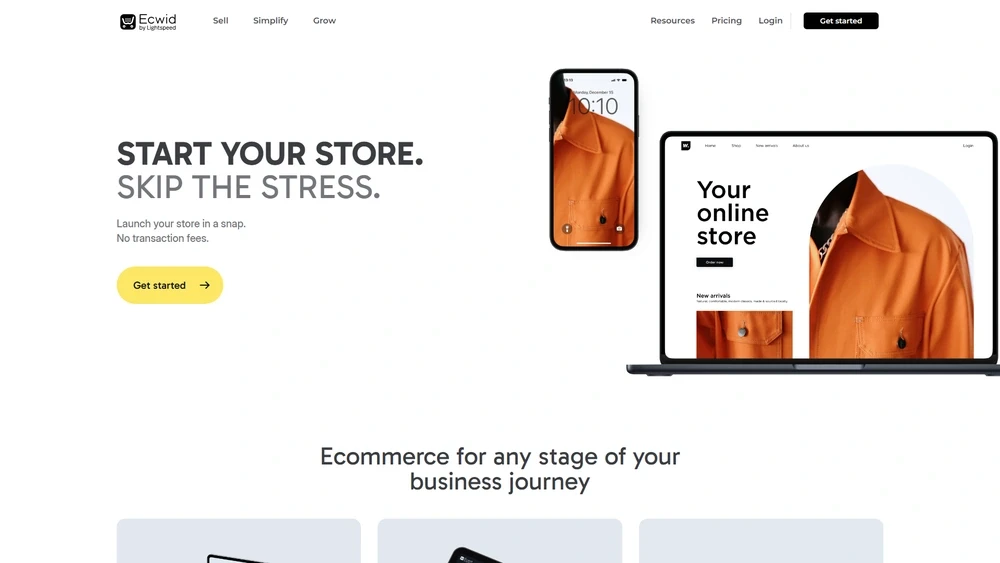
Ecwid Key Features
Ecwid’s feature suite in 2026 combines simplicity with advanced sales tooling, optimized for mobile-first and omnichannel selling. Key offerings include:
- AI-powered Store Builder: Auto-generates product descriptions, tax settings, and shipping configurations.
- Omnichannel Sync: Sell on Instagram, Facebook, eBay, Amazon, and TikTok with unified inventory control.
- Drop-in Widgets: Embed storefronts, product galleries, or single products on any site.
- Native Mobile App: Manage your store, fulfill orders, and chat with customers on the go.
- Built-in POS: Turn your phone or tablet into a checkout terminal, with synced online and offline inventory.
- Multi-Language & Currency Support: Sell globally with real-time translation and tax calculations.
Workflow & UX
Ecwid was built with non-technical sellers in mind, and its 2025 UX proves it. Store setup takes under 10 minutes thanks to guided onboarding and AI-generated catalog suggestions. Navigation is streamlined via a left-hand menu with collapsible categories for catalog, orders, marketing, and tools.
Ecwid Pages — a new drag-and-drop editor — lets users customize landing pages without coding. Integrated chat, shipping calculators, and product options are handled in-line to minimize context switching. Additionally, mobile UX remains consistent whether you're selling or fulfilling, with no separate app interfaces.
Ecwid Pricing Analysis & Value Metrics
As of July 2026, Ecwid pricing remains tiered by feature depth, user scale, and support level:
| Plan | Monthly (USD) | Main Inclusions |
|---|---|---|
| Free | $0 | 1 site, 5 products, social media links |
| Venture | $19 | 100 products, in-app chat, POS integration |
| Business | $39 | 2500 products, marketplace sync, product variations |
| Unlimited | $99 | Unlimited items, staff accounts, all integrations, priority support |
All paid plans include transaction-free sales, SEO tools, and mobile POS. Best value: Business plan for stores scaling across multiple channels.

Competitive Landscape
How does Ecwid stack up in 2026?
| Platform | Type | Ideal Users | Strength | Weakness |
|---|---|---|---|---|
| Ecwid | Embedded + Full Store | SMBs, solopreneurs | Ease + omnichannel + POS | Limited to online sales workflows |
| Shopify | Standalone CMS | Scalers + multi-location brands | Theme ecosystem, apps | Learning curve, higher TCO |
| Sellfy | Simple Sales Page | Creators, digital goods | Instant setup, print-on-demand | Less flexible, limited backend |
Ecwid Integrations & Ecosystem
Ecwid integrates natively or via API with 100+ third-party tools. Key categories:
- Ecommerce: Amazon, eBay, TikTok, Instagram
- Payments: Stripe, Square, PayPal, Lightspeed Payments
- Shipping: ShipStation, USPS, FedEx, AfterShip
- Marketing: Mailchimp, Klaviyo, Google Ads, Meta Pixel
- CRM: HubSpot, Salesforce (via Zapier)
Ecwid App Market continues to expand with plugins for inventory, syncing, invoicing, and loyalty. All core plans include free access to crucial integrations.
Use Cases
- Local Boutiques: Sync in-store POS with online catalog and utilize Facebook Shop.
- Content Creators: Sell merch or digital downloads from existing blogs or portfolios.
- Crafters & Makers: Leverage Etsy integration while building direct backend.
- Restaurants: Use QR menus + Ecwid POS to sell online and in-store.
Pros & Cons
- Pros:
- Intuitive and fast setup with no-code tools
- Broad integration ecosystem
- Outstanding free plan for testing or tiny shops
- Cons:
- Design customization still lags behind Shopify
- No blogging functionality included
- Advanced SEO requires workarounds
Pro Tip: Want to test Ecwid risk-free? Launch a full-featured trial under the Free plan and upgrade when ready — your data and setup carry over instantly.
Final Thoughts
Ecwid shines as an e-commerce springboard, especially for brands that don’t want to rebuild on a new CMS. With its intuitive UX, omnichannel integrations, and continued feature growth in 2026, it serves microbusinesses and niche stores exceptionally well. While less ideal for high-volume enterprise operations or content-heavy sites, Ecwid is perfect for one-person shops scaling to full-time operations — and doing so without breaking budgets.
Ecwid FAQ
Can I use Ecwid with my existing website?
Yes, Ecwid integrates seamlessly with WordPress, Wix, Squarespace, and even hand-coded HTML sites via embed code.
Is there a free plan available with Ecwid?
Yes — Ecwid offers a robust free plan supporting 5 products and basic selling tools, ideal for testing or microstores.
What’s the difference between Business and Unlimited plans?
The Business plan allows up to 2,500 items and marketplace selling, while Unlimited offers full integration access and advanced support.
Does Ecwid support in-person or POS sales?
Yes — Ecwid’s mobile app enables POS sales via iOS or Android, with synced online/offline inventory and receipt printing.
Can I sell digital products with Ecwid?
Absolutely. Ecwid supports downloadable products, license keys, and delivery automation for eBooks, music, or software files.