
In this article
Microsoft Azure Overview & 2026 Industry Position
Microsoft Azure has solidified its position as one of the leading cloud computing platforms, serving a global customer base ranging from startups to Fortune 500s. In 2026, it continues to advance its suite of AI-powered services, machine learning integrations, and hybrid cloud solutions, pushing the boundaries of what businesses can do with the cloud. Azure’s deep integration with other Microsoft products and services—like Office 365, Dynamics 365, and Power Platform—creates unique cross-platform synergy. Its industry relevance in 2026 lies in its ability to unify AI infrastructure, intelligent data processing, and edge computing under one cohesive ecosystem.
From Launch to 2026: Microsoft Azure’s Journey
Azure began as "Windows Azure" in 2010, focusing primarily on PaaS. It was rebranded to Microsoft Azure in 2014 to reflect its expanded scope beyond Windows servers. Notable milestones include:
- 2010: Windows Azure launches for public use
- 2014: Rebrands as Microsoft Azure, adding IaaS capabilities
- 2017: Integrates with Visual Studio and GitHub
- 2019: Launch of Azure Arc for hybrid/multi-cloud management
- 2021: Azure Synapse and Azure Purview debut for next-gen analytics
- 2023: Microsoft Fabric announced—fusion of data, AI, and analytics in Azure
2025 Outlook: Microsoft Azure focuses on autonomous cloud optimization, GenAI readiness for all workloads, and competitive carbon-aware computing.
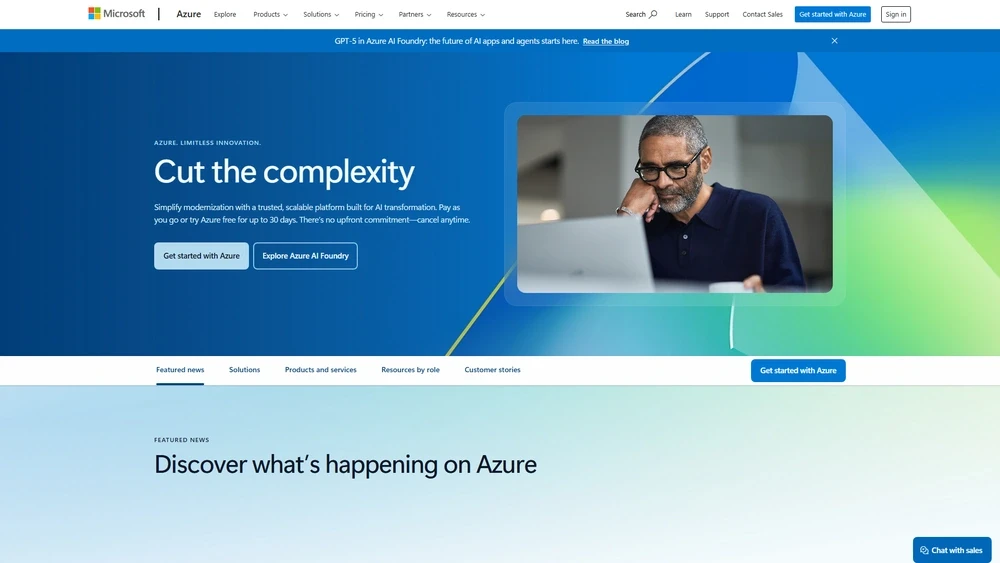
Microsoft Azure Key Features
Microsoft Azure offers a robust set of cloud-based infrastructure and development tools. Core features include:
- Azure VMs: Full control over Windows/Linux servers in the cloud
- Azure Kubernetes Service (AKS): Cloud-native orchestration at scale
- Microsoft Fabric: Unified platform for GenAI/analytics/data ops
- Azure AI services: Including Azure OpenAI (GPT models), Form Recognizer, and Speech-to-Text
- Loaded DevOps tools: Including Azure Repos, Pipelines, and DevTest Labs
- Azure Arc: Control on-prem and third-party cloud systems under one pane
- Security Center: Built-in threat management and compliance recommendations
Workflow & UX
While Azure requires some cloud literacy, it delivers unrivaled flexibility for users via the Azure Portal, CLI, and APIs. Adaptive dashboards, robust documentation, and custom templates help users fast-track deployments. Microsoft Azure CLI allows automation at scale, and developers can manage entire environments with Bicep or Terraform integration. The UX streamlines cross-service dependencies (storage, compute, identity) with contextual links inside the console, enhancing flow for DevOps and admins alike.
Microsoft Azure Pricing Analysis & Value Metrics
Azure uses a pay-as-you-go pricing model, and detailed estimates can be created via its online calculator. Here's a 2025 snapshot:
| Service | Pricing (July 2026, US) | Inclusions |
|---|---|---|
| Azure VM (B2s) | $0.021/hr | 2 vCPU, 4GB RAM |
| Azure SQL Database | $0.008/hr | 5 DTUs, Standard |
| Azure AI Services | From $1.50 per 1,000 calls | Includes language, vision, OpenAI |
| Bandwidth | First 5GB free, then $0.087/GB | Outbound data transfer |
Value Summary: Competitive for hybrid setups, strong for enterprises scaling AI/ML workloads, with granular control on spend.

Competitive Landscape
Azure competes with AWS, Google Cloud Platform (GCP), and Oracle Cloud. Here's a quick comparison:
| Provider | Strength | Best Fit |
|---|---|---|
| Microsoft Azure | Hybrid + Microsoft stack + AI | Enterprise, DevOps, regulated sectors |
| AWS | Mature features, compute scale | Startups, wide industry base |
| Google Cloud | ML tools, Kubernetes leadership | Data science, SaaS builders |
| Oracle Cloud | ERP-heavy and price tiering | Legacy database workload migrations |
Popular Use Cases
- Enterprise AI/ML model development with strong security layers
- Hybrid deployments across on-premises and multi-cloud
- IoT and edge computing with Azure Stack and Sphere
- Microsoft 365 and Dynamics 365 extensibility
- Cloud-scale app hosting using .NET or Java
Microsoft Azure Integrations
Integration strengths make Microsoft Azure standout:
- Built-in Microsoft 365, SharePoint, Teams, OneDrive integrations
- DevOps hooks into GitHub, Bitbucket, Terraform, Jenkins
- Data sync with Salesforce, SAP, Workday, and Oracle systems
- Payments and ERP integrations with Stripe, QuickBooks, and Xero
- CRM/BI visualization via Power BI, Tableau, and custom notebooks
Microsoft Azure Pros & Cons
- Pros: Market-leading security and compliance, seamless Microsoft suite integration, AI at scale, and hybrid edge capabilities.
- Cons: Steeper learning curve for beginners, pricing complexity for larger workloads, and limited free tier services.
Final Thoughts
Microsoft Azure continues to rise as a powerhouse of cloud innovation, particularly in AI, hybrid flexibility, compliance workflows, and large-scale enterprise deployments. SMBs may appreciate its scalability and integration with existing Microsoft tools, while enterprise teams can gain advanced data insights and deployment flexibility. Though the learning curve is non-trivial and costs can swell, the platform excels for those seeking long-term cloud strategy alignment with robust AI, analytics, and infrastructure tooling.
Microsoft Azure FAQ
What is Microsoft Azure used for?
Microsoft Azure is a cloud service platform used for hosting apps, AI/Machine Learning development, data storage, networking, and running enterprise software.
Is Microsoft Azure free?
Azure offers a 12-month free tier for select services and $200 in credits for new users, but most services operate on a pay-as-you-go model.
What are the advantages of Microsoft Azure over AWS?
Azure’s strength lies in hybrid deployments, native Microsoft product integration, and strong enterprise security offerings—particularly for Microsoft-centric organizations.
Does Azure include OpenAI services?
Yes, Microsoft Azure provides OpenAI services, including access to GPT-4 and other large language models for AI development workloads.
How secure is Microsoft Azure?
Azure leads in cloud security compliance, offering over 90 compliance certifications and features like Azure Security Center, Sentinel SIEM, and multifactor authentication.